Stop handing residents the move-in checklist alone
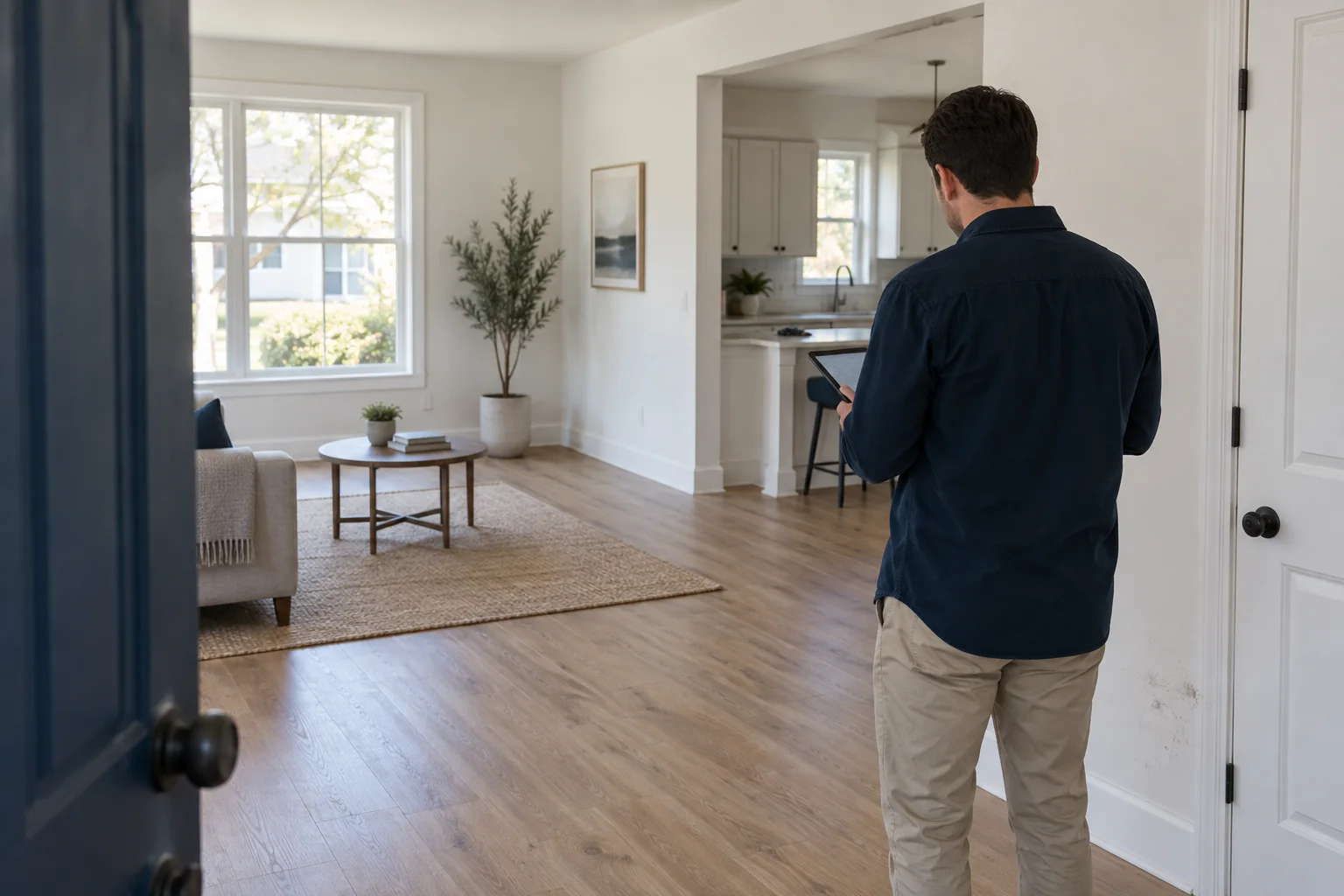
Somewhere in your lease packet there's a move-in checklist. Two pages, rooms down the left, a condition column and a comments column. You hand it over with the keys and the garage remote and ask the new resident to fill it out and return it within a few days.
Most come back. Some come back with every box ticked "good." Some come back with forty complaints, including a scratch you know was fixed on the turn. A few never come back, and you file the blank copy and move on.
Then, a year later, the move-out walk. There's a burn mark on the counter and a cracked shower tile, and the deposit conversation starts with you holding a form that says "kitchen: good" in someone else's handwriting.
That's the habit I want to talk you out of.
Why the hand-off feels right, and where it breaks
The case for it is real. The resident is the one moving in, so they have the time and the motive to look closely. It saves you a trip during a week when you've got three other move-ins and a board packet due. And several states require landlords to give tenants a condition form or a window to note existing damage, so handing over the checklist feels like compliance. Check your own state's rules, because some set deadlines and some specify who signs.
Keep giving residents that chance. What breaks is letting their form become the record. A resident-completed checklist has no photos, no dates you can rely on, and descriptions written by someone who doesn't know what will matter later. "Fair" isn't evidence. A tick mark isn't either.
A move-in inspection exists for the move-out. Twelve or twenty-four months from now, someone on your team stands in that unit and has to decide what's normal wear and what's damage. Every item on the checklist is there to answer one of those future questions. If your record can't answer it, the item didn't do its job.
The checklist, room by room, and what each item protects
Our move-in inspection checklist template runs in the order you'd actually walk a unit. Here's why each part is there.
The kitchen starts with appliances. Open the fridge, the oven, the dishwasher and the microwave, and photograph the insides, the door gaskets, any missing shelves or crisper drawers, and the cooktop surface. At move-out the argument is almost always "it was already like that," and a dated photo of a clean oven interior ends it in one look.
Cabinets get the door faces and hinges, plus the shelf under the sink. That shelf is where slow leaks show up as swollen particleboard, and you want to know whether the swelling predates the resident. Run the sink, try the sprayer, look underneath for drips. Counters get a close shot of every chip, burn or lifting seam. Kitchen flooring comes last, because it takes dragged appliances and dropped pans, and the existing scratches need to be on record before anyone adds new ones.
Bathrooms are where a lot of disputes come from, mostly about moisture. Photograph the grout and caulk lines, because mildew and missing caulk at move-out turn into an argument about neglect versus age. Note any chips in the tub or shower surface and any cracked tile. Flush the toilet, check that it stops running, and rock the base gently. Test the exhaust fan. A dead fan at move-in that nobody wrote down becomes mold blamed on the resident a year later. Towel bars and the mirror get a glance too, since ripped-out anchors are a common move-out charge.
Living areas and bedrooms are mostly walls and floors. Walls get nail holes, patched spots and scuffs, with a wide shot of each wall so the overall finish is on record. Carpet gets photographed in daylight if you can, because stains and traffic wear barely show under overhead light. Then the smaller items: bent blind slats, window screens, closet doors that jump the track, cracked outlet covers, light fixtures and whether the bulbs work.
Systems and detectors are a different kind of item. Test every smoke and CO detector and record that it sounded, with the date. A dead detector at move-out isn't really a charge question, it's a safety one, but you want proof it worked when they took the unit. Run the HVAC in both modes and photograph the filter with its size. Look at the water heater pan for water. Open the breaker panel and note whether it's labeled.
Keys, remotes and access close out the walk. Count every unit key, mailbox key, garage remote, gate fob and amenity card, and write the number down next to each. A missing key at move-out means a rekey, and the only clean way to charge for it is a signed count from move-in. In an HOA community, also note which pool or clubhouse fobs are registered to the unit, so the association can deactivate them later.
Writing notes that hold up, and signing the record
A note that holds up says where, what and how big. "Kitchen counter, left of cooktop, burn mark about the size of a quarter" survives a dispute. "Counter damaged" doesn't. Name walls the same way every time (entry wall, window wall) so the move-out inspector can find the spot. And write down what works, not only what's broken: "dishwasher runs full cycle, no leak" is a finding.
I used to tell people to photograph every single item, every outlet plate and every hinge. I've partly changed my mind. A hundred photos of intact switch plates is noise, and nobody at move-out will scroll through them. But skip them entirely and you lose the proof that the room was fine. The way I resolve it now is one wide shot of each wall and floor, plus a close-up of every defect. The wide shots cover the good condition, and the close-ups carry the arguments.
Photos need dates attached by the tool, not by memory. A camera roll on a leasing agent's phone that gets traded in next spring isn't a record.
Then the signing. Walk it with the resident if you possibly can. If you can't, do the walk yourself with photos and send them the finished report with a window to add anything they see (whatever your state sets, or something reasonable like a few days). Their additions go into the same record, dated, rather than onto a separate sheet you'll have to reconcile. The resident signs, and you both keep a copy. A link they can open in a year works better than a carbon copy in a kitchen drawer.
Anything that's actually broken at move-in shouldn't just be noted. A dripping faucet or a dead bath fan written on a form and left alone becomes a "known issue" the resident lives with and then disputes. In Sitesui, a finding on the move-in walk can go straight out as a vendor work order, and it stays open until the repair photo comes back. If the resident finds something in week two, they report it into the same queue, so it's dated and on record instead of buried in an email.
At move-out, use the same template in the same order. The move-out inspection then lines up item by item against move-in, photo next to photo, and the wear-versus-damage call gets a lot shorter.
Want to see this in your own inspection workflow?
Send your checklist and your community or property list — the form at sitesui.com/setup, or an email to hello@sitesui.app — and we'll build your first community for you — the checklist as a template, the properties imported — free, by email, with no call to book.